Industry History Meets Innovation ft. Matt Van Fossen
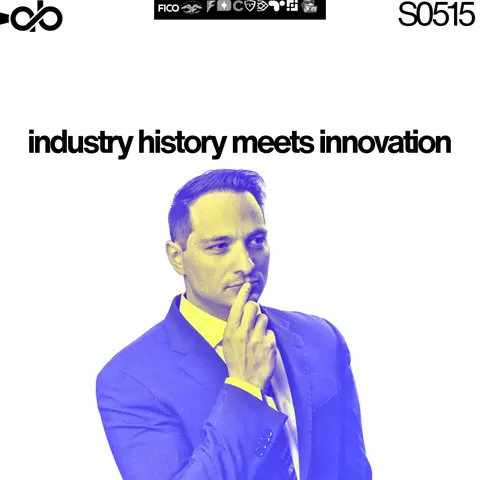


0:00 Hello and welcome to the Mike Dupp show. The ultimate hub where the hidden stories behind the mortgage industry come to life. I'm Mike Kelleher. And I am Michael Zhao. And in every episode, we dive deep into the entrepreneurial spirit. Check mark for this show. The strategic insights and the breakthrough innovations. Double check mark for this show that built the world's greatest mortgage companies. So whether you're advancing your career or scouting for industry leaders or exploring opportunities in fintech or proptech, you're in the right place. Get ready to unlock the story behind every mortgage. Let's dive in today with Matt Van Fossen, CEO of Absolute Home Mortgage Corp. Located in Fairfield, New Jersey. The corporate headquarters. They are an IMB. They've driven over $10 billion in retail originations. They are expanding so fast. Matt can enlighten us on how out of date maybe that number is. He's also CEO of Mortgage Automation Technologies. I've had the privilege of meeting Matt when he was already successful in both the technology and mortgage side back in 2013. He has been extremely involved in Data UE. He was the first one to talk teach me the word gui and I think we'll find out today. But I think the Mortgage Automation Technologies is really the culmination of all of the different technologies he has brought and will be bringing to the market all wrapped up under that umbrella. So our show's always to you're a loan officer processor out there. You could be the next leader of a company in the future. I think technology is the highway to get there, but there's a lot of distractions along the way. So we're lucky to have somebody that's able to navigate it both. But also you'll hear today also balance it both. So appreciate you coming on here, Matt. I want to just thank you. You do so much for the industry and you do so much personally to put so much on your plate so that just have the time to just come on here. I want to thank you
2:10 now. Thank you both for having me. I'm excited. You know, it's been a conversation a long time in the making. So, you know, it's great to be here and you have a cool story that matches what I'm a big fan of and our show's a big fan of. You always thought technology was cool, but you found a mentor that encouraged you to get into mortgage and your mind would do very well in mortgage. I know people fall into mortgage but sometimes getting the right guidance along the way can help your starting line be a little bit Ahead of others that are a bank teller turned into, you know, a mortgage extraordinaire. Can you talk about your first couple years into mortgage and how that obviously connection changed the acceleration of how to get to where you are because you are extremely young or how successful you are traditionally in this business? It's an older, grayer haired place.
3:06 Yeah, it's, it's hard to believe that that occurred almost 25 years ago now. You know, I had a tech company with my best friend in high school. You know, this is back in 2001, 2002. You know, our idea with making money back then was we don't want to go be, you know, servers at a restaurant. We think, you know, making a couple of dollars an hour, we think we can use what we learned, you know, in our early teens to make some money. And that was the Limewire and Kazaa generations in Napster. And we were, you know, restoring computers in high school, charging 100 bucks for a restore when kids were downloading legal music. And, you know, that, that, that we did really well, you know, made a lot of money in high school. We were able to get cars. You know, it was a fun time. And it's how I got into mortgage. My best friend's dad called me one day while I was at school and said, hey, my friend has a company, he's having problems with the systems, can you go help him out after school? And pulled up to a mortgage company and walked in and I met Marvin that day and you know, we had a long talk. He realized that I guess I had a chip on my shoulder as a good salesperson, sold him on fixing some of his systems, you know, gave him a bill and, you know, I started talking about what he does and how much money he makes. And he introduced me to the concept of mortgage. You know, back then it was a big refinance, big purchase era. This is, you know, 2001, 2002. And I said, hey, can you teach me? Can you teach me how to do that? He said, sure, should start showing up after school. And that's how it all started. You know, he pulled me out of the technology space and started teaching me mortgage. And I started showing up at 17 years old. And immediately I realized that there was some big gaps from manual processes to technology. It happened in the first couple of days. Back then, Countrywide, quick and easy was the, or the fast and easy was the big product. And they were overnighting paper packages and stacking orders. That was my first job, was putting the stacking order together and the overnight packages together. I said this is ridiculous. I was on the website, they do E submissions now. Let me go get a scanner and I'm going to high speed scan these documentations and I'm going to easten it them. And magically we got an approval three hours later, not three days later. And it was like I started walking on water in his office when, when I showed them, oh, you know, there's electronic submissions. You know, that was the, probably the first segue I had into mixing mortgage and technology very early in my career.
5:29 Wow. It just seems that because I remember those days we were here in San Diego, we were using California overnight or Transbox and then getting, getting things and then we could, when we could finally start uploading that was what, 2003 or 4? That and beginning to upload into things. We were able back then I was using Calyx Point, I wasn't using Encompass yet, but we were able to, you know, we're going to upload, you know, my scanner I think was $500 because I couldn't stand to listen to the, I had to go. Right. So every part of technology now has escalated to a higher level of, of speed and efficiency. But yet as an industry we've actually, we've gone through 25 years of progression, but we actually, as some people say, have we done 25 years one year at a time or are we actually progressing? And when we talk about the use of Encompass and technology, it seems to me it's the devil that we know. And although Encompass took over its functional usefulness and popularity over from Calex Point, you know, I'm going to use a historical analogy here. Napoleon Hitler tries to attack Russia in the wintertime and then they fail and we're entering into the winter of the mortgage industry potentially one more time as interest rates go up and, but yet we still have this antiquated Encompass system and now fintech is entering where they're trying to introduce more, more loss and point of sale systems on top of. So is this toolbox just a hobby horse or is this something that you think that you can take encompass and with ICE's involvement into the next level?
7:14 Yeah, I think it's a great question and I'll dissect in a couple different ways. You know, notice you said one word antiquated. I feel that's an opinion. My Encompass instance is an antiquated. It's awesome, it's stable, it's fast. But we stay on the cutting edge of their releases and we're watching their roadmap. And as the releases come out, we're early adopters of everything. So I think encompass instances are what you make of it. Now let's bifurcate that into a couple of things. Right. What I look for Ice on is not innovation, is stability. It is my neural network. It's what I run my billion dollar lender on. Is it expensive? Sure, but you pay for what you get. I have 99.9% uptime. I'm able to recruit the majority of the mortgage industry and plug them into an interface that they've known for 20 plus years and it's a stable workhorse. And the best part of it is the integrations network. I want to, I need a vendor at a conference, I can easily say are you integrated into Commerce Partner Connect? And if they are within minutes, I can integrate that. Compared to some of my peers on other third party platforms where I hear the nightmare stories of what they have to go to to integrate their tech stack and now you're locked into that tech stack because you made a substantial investment into that. So I think there's a lot of pros with Encompass and ICE mortgage technology. Now I'll also speak openly and say there's some cons. The user interface is the same user interface largely we've been using for many years. Right. And web is a hard migration. And I think that, you know, when you start talking about my product, you know, that's where big point of sale came in. Amongst many other things is can we have a product that sits on top of Encompass, that looks at Encompass as a core database, but allows a innovative group to come in and say, well, how can we push technology to the max? How can we. Michael said gui, I used to say graphical user interfaces. Well now I say mobile first interfaces. How do we actually take that antiquated user interface and give it to loan officers on this? How do we make it so it's mobile, responsive? How do I make it? The 99% of a loan officer's day can be lived on this. And that's where we are today. But going past that, I'm saying this is dead user interface Michael is dead. If anybody's thinking about building cutting edge UIs now, it's already been in the past. Voice is the new interaction. We're not going to have to interact with UIs in the future. The next three years, loan originators are going to be talking to their phone. Hey, you know, calling out a call sign. Hey, Loa, right, My loan officer assistant, can you go find the Jones file for me? Update that Pre approval of 450,000 rerun findings on it and trigger that out to my real estate agent and the voice UI will actually do it. We're seeing the advent of meta glasses becoming nomenclature and I think that's actually the future is the best UI might be no ui. So you could be developing for today to solve problems of five years ago or you could be developing for today to solve the problem of three years from now.
10:26 Elon Musk had a story of they were trying to figure out when ordering a Tesla, they're trying to figure out how do we have this. People are getting car loans and stuff like that. He meets with his president and they're like how do we, we're on the app on Tesla and we want to reduce the amount of questions for financial documents. And they sit there and go, and then Elon says, hey, open up your Domino's app and order a pizza. And they said, okay, we got 10 things to try to from beginning to ordering the pizza. How do we order a car by only doing 10 touches? And then the banks are like no, no, no, no, no. Then U.S. bank comes in and says hey, we're going to, we're going to agree to do, to the, do this. But these are the defining conditions. And now they have, you know, they have, they don't have, they have a very low default ratio on Teslas and as a result on the loans that U.S. bank does and then they increase their market share on cars. Do you think that on the mobile app, you know, Samsung tried to introduce the foldalphone. It didn't do as well because of the Apple technology. Now Apple is going to introduce the fold fold out phone. What do you think can be done when it comes to voice technology and also the app technology to reduce the amount of touches by the user, by the user experience, the borrower user experience and as a result making the user experience for the originator and processing so on and so forth down the line an easier experience for that purpose?
12:01 Sure. So take that question in a couple different ways. One, you mentioned some great companies, Tesla, Apple, some great Ames, Musk. Right. I look at two things from those companies. First that I always think about when I'm engineering and designing products. Steve Jobs had a great quote. The people do not know what they want until you show them what's possible. That's one that means that maybe what you're hearing feedback from an end user that they want is based on what they see as possible, but they're not aware of what's coming Next already then Musk has two really great quotes. One, fail fast. Second, the best part is no part. I think about that in engineering a lot. Not every idea is going to hit. So fail fast, learn readapt. And the best part is no part. Eliminate sections of the process you think you need. Now that's hard in mortgage and let me tell you why many people develop in single links. I'm going to go build a voice AI solution. I'm going to go build a better mobile app. I'm going to go build a better los. What I believe is it's not about one lien, it's about multiple. Let me explain. When you release technology at a mortgage company, the first thing you're going to face is rejection and lack of adoption and immediate I don't want to learn something new. Change management is the hardest part. You can have the best solution on earth and a loan originator that is not a technologist is going to say, yeah, I don't like it just because I don't like it and could disrupt your project. So when designing technology, I believe that you have to take it from three approaches. You have to design that it has legacy. So it works with their old system, it works as a transition and it works in the future. So when you take things like voice AI, that's great. We can design a voice AI or a better mobile app. But does it work backwards compatible with the core system? Does anything I can do in the voice app still allow me to do it the same way in the manual entry? Does it allow me to do the same way in the mobile experience? That's hard because you're designing and catering and engineering to three different types of users.
14:19 The silent part of the P and L or the balance sheet is really when they recruit new loan officers and they know Encompass and the amount of cost in that change management, in that training, in that learning. Many other companies don't factor that in and for that reason it's. It's almost impossible to pencil out if you added that piece and that most don't. Leaving Encompass just doesn't make sense and it does build a. I think our industry always needs more canvases to paint on. I think the big point of sale is painting on a canvas to build another canvas has always been my frustration. So I, I believe it's great what you're doing, Matt. I think it's needed. I think the migration to a point of sale like yours, like now, is the perfect time. I have a historic question for you. So when I started seeing point of sales come out during my fintech play. You know, back in the easy mortgage apps days when I first started, there was the Encompass, the websites that used to come from it with encompass and web center. Is that what it's called? And there was a short application and a long application and everybody I knew, every originator that I ever talked to use the short app and then they made a phone call. Obviously point of sales came out, a lot of great books on enterprising and data and scaling came out and so everybody went to the point of sale and the idea of a short app went away. But I don't know if the market ever really decided that it didn't want it wouldn't prefer a short app. Is that something that you have thoughts on or is that something where the the big point of sale can be like the short app into the long app later on, or is the industry just unable to do it now because of like first source data?
16:18 Yeah, it's a great question and it's actually part of the genesis of our product. You know, I'll tell a quick story about inside my own organization. I go into a branch and I sit with one loan officer and I say, matt, I have the best system. I call every borrower, I fill out the application, I spend the time personally with them, I invest an hour into every call. And I have the best methodology because I develop the best rapport. And then I go three offices down, I meet with another loan officer inside the same company, inside the same branch. Man, I got the best system. I don't even talk to the borrower. I get the referral, I trigger out my mobile application link, they do a full app online, I get all of the data, I write up the scenario. I spend 10 minutes on the phone with the borrower, I pitch them a rate and I close them. I got the best system because I can do the best volume inside of the same company. Inside of a branch, you can have bifurcated workflows based on loan originator preference. This is where I think tech vendors in our industry have always got this wrong. Point of sale is typically a one shoe fits all model. It is developers and engineers telling loan officers how they should originate loans. And we have a better way. I am the complete opposite of that. When we architected big point of sale, it said, have it your way. Every application is configurable down to a loan officer inside of the organization. So I can have a short app, a full app, a semi short app, a lead app. I can have 18 different workflows inside of a company. If I want and say this loan officers on this workflow or this group of branches on one workflow and another one's on another. The biggest part is no developer needed. Can the company go in as an admin port into the admin portal without the need for an engineer and go and create their own workflows and map it to their own fields? That is essential. And that was one of the genesis ideas behind big point of sale was we're not going to tell you what you need to do. We'll recommend and give you an out of the box workflow, but you should be able to make those decisions yourself.
18:17 That's exactly my biggest pain point in what I do is I don't know how to exactly articulate what like what you said is what I believe the industry needs and it fits perfectly. And then you get into this sales cycle and you represent both lenders and somebody selling into lenders. And so you can take it in your segment of top 100 lenders or you could just take it maybe down channel to take yourself out of how close you are to it. But the problem is in our demo it's going to be hard for the lender to really understand how much better yours is than the others that just have it because you never even get have time to get into the bifurcated process. Do you see in the future any way it seems I feel like it's getting worse as I'm referring or trying to connect people. Do you see any way that this sales cycle or like the repetition of getting a demo, sitting on a demo, then having to make a decision within 20 days of that demo, will that cycle stop? Or how can I advise vendors to try and get deeper with lenders and get a longer shot like a four hour deep dive.
19:33 Putting four hour deep dive in is hard. It's hard selling out on a prospect. We demo a little bit differently. When a demo gets scheduled, a big point of sale, it's mandatory for the engineering team 72 hours before the demo to deliver a pre demo experience in a fully configurable test environment with loan officers, loan officer access and administrative access. So they have three days to test bed and try out the system to develop their questions. So they come in and we actually see our clients going in or our prospects going in, trying out the system, doing applications and we evaluate their work beforehand to see how deep they went in. Now when we go into the demo, we know what we're dealing with. Did somebody ignore the email and not kick Tires or look at it and we have to do it from scratch. Did somebody do a full application run, credit run, underwriting findings? We can say, all right, we can skip the application section of the demo, save ourselves 15 minutes and let's just talk about what your experience was like. What questions do you have on that experience? We really like doing pre demos because there's three types of learners. Visual, hands on and written. Some people need to learn by trying it, some people need to read a manual and some people need to see it. Can you accomplish all three of those before you even get to the demo?
20:53 Matt, we go through a series of questions here. I want to be able to get into this, I want to make sure I get this quote right. You say that it's always about the customers and to make sure that families can get into homes. How do you connect with borrowers and build relationships that last because you're the guy in the room that speaks. Obviously you're highly intelligent. So you're the CEO, you're a developer, you know how to originate, you're a regulator, you've got, you're a jack of all trades. I mean, how do you speak in street speak, I guess to the borrower and, and translate to them so that the originator can also speak to speak to them at the same time in a similar language.
21:38 So you just listed off a resume of my credentials. Right. But you missed what I am first more than anything. Okay. Which is where I started. I'm a loan officer, I'm a loan originator. I'm a mortgage consultant. I have an active NMLS id. I can't help myself. I see a deal come in or I'm referred. I am taking that application, I am originating that. So how I stay sharp on the street level is I use my own systems on a daily basis. I still originate, still take that application. I'm in there working on it, testing it on real life data. I don't need the money to originate a loan. I just like being the loan officer. I like helping people apply and I can't help myself take an application. And that's what allows me to leave my tech company. That's what allows me to go to Washington and actually have hands on interactions with them and say, look, this is my personal experience with dealing with consumers and that's what allows me to lead my sales force at absolute home mortgages. I say, guys, I know what you're seeing. I know that the problem that you're having with the system, I know the sentiment of borrowers today Dealing with rate negotiations and what the market feels like, because I'm living it with.
22:50 I was just going to ask like when you, your the cliche question we have on here is just finding out how people build trust. And you obviously have many different lenses of which to build trust. You help the politicians trust us to say which parts might be adversely affecting the ability to get people into homes. You have two companies where you know they are trusting your vision. What's your strategy on building trust? I, I, what I've read, I know transparency is, is, is definitely a big one for you. Is it, is there beyond things, beyond transparency. You focus on putting the work in and caring, you know, leading. Some people say lead by example. Sure. I think lead by example is great. But I say toe the rope, right? Don't have a throne complex. Be down to earth and be available. I'll take that question from a couple different angles. My loan originators, okay, I'm the CEO of the company. Sure. I got 400 plus loan officers. Any one of them call me, I pick up the phone. I don't care that it's Saturday. There is no definition of my time when it's my role. Some people say work, life, balance. I say there's no such thing. Right? There's, it's not my time. I have a job to do. I have to build trust and rapport and then my people need to know I'm there for them. Same thing with my clients. A big point of sale. I'm on implementation calls. You know, like I said to you, like 40% of my schedule is locked in before I even begin. A week and it's booked eight, eight months out. I'm on weekly cadence calls. And customers, I jump in and out of meetings. Am I on for the whole hour? No, because There might be three or four meetings going at a time, but I'm jumping in 20 minutes. I'm saying, hey, what's going on? Okay, what problems do you have? What new solutions do you want to see built? You have to be hands on. And when your employees, when your clients at a software company know that you're there because you're the one that they believed in, they believed in your vision and your product. Well, they don't want you to disappear after the deal is closed. After I recruit a loan officer, I can't disappear. How I built that trust is I'm still there. And you also need a great team behind you because that breaks at certain sizes. So you really need to be able to break that up a little bit.
25:17 So then how do you create human connection across two companies? In that case, are you a Renaissance man to where you can speak to the masses or are you the Rain man because you're hyper focused? I don't know how to answer that question. I think connection is connection, right? I think if Michael follows me on LinkedIn, what drives me nuts is vendor blind outreach. People that don't know me, that don't look at how I communicate, what products I had, I had a point of sale competitor reach out to me on LinkedIn the other day, asked me if I was thinking about a new point of sale system. I just respond to them like, dude, that is the biggest out of touch outreach. You didn't have the courtesy to reach out to me. Know that one of your competitors, Right. And that's what, you know, kind of like irks me a little bit about the industry is it's so much broad outreach. I believe that the best way, if you really want, if you're a tech salesperson or any type of vendor in this industry and you want to get executives, spend the money, show up. Okay, know who your people are. It's very easy to research me. It's very easy to know what my hot button issues are. Introduce yourself to me at an event, say, hey Matt, can I get a minute of your time? I really like some of the stuff that you're doing. Maybe this is where we have synergies and start a conversation and develop a relationship that way. I have 10 times more respect for that than if you send me an email or an email. It's like, oh, I have this new innovative AI BS or whatever the it is, you know, that you're trying to sell. We'd have great synergy on 95%, you know, lender efficiency.
27:07 Yeah. I'd reduce your cost in half. It's like you don't even know my cost. I, yeah, and it, I mean, that's what part of our show is, is to try to get the right leaders on and we try to help the vendors at least have a, a commercial associated with those leaders. Any little, as Matt's pointing out, any little brick you can stack brick by brick versus just coming in with a sledgehammer blindfolded for that matter, is not going to work. So with that said, Michael, you know this. You've been around for a long time in this business. It takes a long time to build a name for yourself and get a foothold. Okay. And I warn a lot of these AI startups that are coming in, be careful of spending Too much money too fast because you're going to think you have transaction traction and then you're going to get destroyed. Okay. Because it is a long time to build reputation, to build a name for yourself. And it is a connection based industry.
28:10 It is. And you have to physically be in front of them. You have to go to the conferences by any means possible. And then you always have to level up. And the more you level up, the more you'll level up on the type of clients you're working with. You know, spending 10 grand to put your logo on a sponsorship is going to magically make it great in business. Right. Spend your money wisely and don't think by throwing a party it's going to do it either. Yeah, I. Sometimes it can backfire. Like you throw a big party in this market and some companies, that's their brand and it's good and they need to reward their clients. I guess Matt and I are saying the same thing. Don't judge yourself based on someone else. Go to the NBA. Do the right things, take the right pathway.
28:55 I mean I don't, I don't throw parties for bitcoin to say, oh, we don't really sponsor anything. We never do. Sometimes we show up with a trade show booth. That's about the maximum that we'll do. 90% of my budget goes into product development. That's it. It's going into engineering to make the product better. If somebody doesn't see that the product's great, it doesn't want to use it. Okay, then don't use it. I commend that because if you are doing a booth, you're a lot of that money goes back to advocacy one way or another, depending on where it is. But these trade shows need, need booths. I want to spend money on advocacy. I spend money on. Obviously I'm a more back donor. Right. I'll donate money directly to advocacy funds if that's where we're putting part of our budget and if we have a return on it.
29:35 And not just a donor. Matt has served as a, a leader in the top what's considered the toughest position in mortgage, which is chairman of orpac. If I said that, that right. But I knew I knew the name more pack steering committee. The ability to steer people into making donations. I knew what you did, but it's tough asking for money and we don't ask for much here on this show but we do need a little bit to take care of microphones and the editing and we. So we couldn't do it without some of our industry sponsors that help make this show possible, we're going to jump to a quick halftime show of 2030 second pitches of some of the best technology we've been able to align with. And on the other end, we're going to take it home, Learn more about Matt and Absolute Home Mortgage and get some tidbits on the industry as well.
30:44 Mortgage technology wasn't supposed to get this complicated. One vendor for productivity, another for automation, another for analytics, another for integrations. More email and Slack notifications, more invoices, more passwords, more contracts, more security breaches and errors. What if it could all just be simpler? Meet Sharky Byte one platform built specifically for mortgage lenders using Encompass Desktop productivity tools, Ocean Workflow Automation, Deep Dive Operational Intelligence, Encompass web Enhancements and customers system development when your operation needs something more Sharky Bite FICO Leading innovation and financial empowerment for 35 plus years innovation leadership MBS decisioned with FICO score 10T adopters representing over $377 billion in mortgage origination volume over $1.6 trillion trillion dollars in mortgage servicing portfolios FICO scores best More approvals, less risk FICO score 10t verifying income for all your applicants means you need roughly 23 different vendors and waste hours and hours of your team's time. Truark combines all major verification methods into a single easy to use platform to give you a completion rate of 75%, cutting your cost by up to 50% and getting real results for your team. True work your one stop shop for income verification. Click Verify Repeats. Talk to our team today.
32:31 Speaker F: Cyber and Wire Fraud can you afford the risk? Today's automation and technology based trends demand solutions to fraud threats. Funding Shield provides lenders and investors real time transaction level verification. Certified wire fraud protection to protect loss of funds at closing due to cyber based and other threats. We help improve your bottom line through fraud prevention, risk management and validating the parties and documents involved in mortgage closings. Prevent fraud and theft on your closings. Speaker G: Covered is the digital insurance agency built into the mortgage platforms you're already using. Covered compares options from 65 plus regional and national insurance carriers and delivers the top options to your borrowers right inside your existing workflow. Visit itscovered.com to learn more.
33:27 With True, we help you understand borrowers so you can help them as you grow your business. We stand for truth and trust because our AI powered technology leaves no stone unturned, no data point unchecked so you can make the right decisions and your customers loans can be approved faster. Lending Intelligence True. Five minutes. That's all Addy AI needs to prep a CTC ready file. Tedious income calcs done W2s, 1099s bonuses ot Addi AI handles all of it. Gain hours back, rack up referrals and grow your pipeline faster. Funding fatter pipeline. Addy AI 5 minute processing power. Your shortcut to save scale starts now.
34:30 We knew this was going to be a fun show. Matt is quoted as saying, See, we do our research. We said going into this, if you want to be on the leading edge, you have to be okay with a little bit of discomfort. We talked about the comfort level of building your brand in the mortgage industry, but I think when you have any technology, you have to get a little bit uncomfortable. Steve Grossman, also from New Jersey, said that your superpowers, you can sit with a developer, a loan officer, a regulator, a CEO and speak each of their languages fluently. How do you think that you have a cmb? You're moving up in the mortgage industry as the Mortgage Bankers association through putting in the work. Like you said. You're showing up everywhere. You're even taking classes now and servicing in other areas. We just had Ashley Puckett on a cmb. She also said, don't give me one lane, give me all the lanes. Is that the new young gun approach that is like, get me in all the lanes and, and get me representing the mortgage industry because it's, it's going to not be as linear as it used to be. Like, what's, what's going to be your speak for the future of the mortgage industry to help guide them a lot to unpack. There one is challenge yourself daily. Right? I don't, I don't claim to know everything about mortgage. And where else can I learn, right? How do I focus on my weaknesses? You know, so when I started taking the servicing classes, I just realized, hey, you know, I'm not that good at mortgage servicing. How do I, you know, increase my knowledge of it? Okay, yeah, I have a cmb, but I did worse on the servicing section of the CMB than any other one. So I said, okay, well that's an area I need to improve. So invest. What does it take 30 hours of my time to sit there at night on my iPad and just kind of read. I'm just going to get better for it and then taking that knowledge and then applying it back to your business unit. One reason I operate in multiple lanes is I'm trying to figure out, well, where does the innovation need? Right? I think that I've been blessed along lines with my business partner Joe Rodriguez, that we have a very interesting preview to the industry. Right. We're executives that know how to develop technology, we know coding and engineering and we know origination. Well, there's not that many developers that own mortgage companies that can sit there and actually engineer their own solutions and test on themselves. So why not take advantage of that? Well, the best way to give octane or fuel or jet fuel to that is continuing to educate yourself and broaden yourself. So I'm not telling young professionals out there, go take on the world and master everything. And once you master everything, then you'll become successful. I'm just saying challenge yourselves daily, educate yourself daily. And you know what comes of that is you become extremely well versed in the industry as a whole. Understand how all the connections work. If I talk to the average loan officer about GSEs and how secondary market works and hedging works and how loans are sold and traded, they would probably have no idea how the backbone of the industry works and the rates that they're selling on a daily basis apply. Well, if you don't know, maybe you should know.
38:00 You remind me of when I had met Chris George 25 years ago when he CMG mortgage and he. And he, and he had just rolled out a product with Macquarie bank at the time on, on a first trustee, he lock up to like $5 million or something like that. And then he would, you know, going, if you go back to do something from in 2001 ish, you know, enrolling something out that's not stated income, it's a pretty rev. Revolutionary product. And so you have this type of drive. And he wanted to do it because he was pro. He was provoked and challenged to do better. Not just to produce a new product, but to produce a financial services product that was going to be better for the industry, which is why he did what he did. And that product still exists now at the cmg, at CMG Wholesale and Retail. But what do you do to provoke challenges for yourself? Or do you meditate? Are you a man of faith or do you just have the original PhD? Are you poor, hungry and driven to succeed?
39:04 I don't know. You know, my coach tells me to meditate all the time and then I start thinking, you know, in my own head for more than 30 seconds and I come up with 15 other ideas. I'm like, all right, I got to shut that off, otherwise I'll drive the development team nuts. Of course, I think we should all be people of faith, you know, you have to really live a good life and have values. I do have a chip on my shoulder though. Like a lot of my driving force has been getting burned. Michael. We talk about my no contract models and pricing transparency model. That was because vendors kind of messed with me contractually and after years of giving them money and you know, being a good client, paying my bill on time when the industry downturns happened and I was like, hey guys, we need to rework on this. You know, we can't be working on these minimums. We're down 60 in volume. I got not my problem. Well you know, I sat there and was, you know, giving intellectual property, being a good partner and helping with information. I said okay, that's the way you're going to play it. Well then we're going to come out with a control product. The lenders are going to fight back in the vendor network and people talk about build versus buy. Well, I tried to create lane three which is crowdfund. We're going to put a group of lenders together, we're going to put them in control of the fintech product. I'll lead the force because I possess the knowledge. We'll co fund it. We're going to come out with a price point that's 40% of the pricing in the market. And we're not going to lock anybody into a three year contract. And if we gain market traction with it then at least I don't care if you're a lender and you don't sign up for big point of sale, great, don't, it's your loss in my own opinion. But at least use us. Meaning at least take a demo, get the offer and get the loi and then go back to your vendor that's giving you $100, a closed loan, a three year contract and say well I can have this on a month to month contract for 40 and a whole bunch of other lenders already did it. At least now you have a price point that you can go to these other vendors and say, well there's another option out there. Before we came to market that option didn't exist. And I look at SaaS in the mortgage industry. Software as a service is different than any other industry. You can go to a website and you go to Canva right now and sign up for free and get a trial and have it installed and working in 15 minutes. You can do the same thing with Microsoft Office. You can go get Microsoft Office users, go online, sign up for $20 a month, see the pricing on their website and get it installed. We talk about the sales cycle in mortgage and how broken it is. We have to spend money, go to a conference, we have to have a trade show booth, we have to grab somebody off the aisle, bring them in, then follow up with them for a demo. And then the demo goes to decision maker and then it goes to the sales team for adoption. And then it goes, okay, give me an offer. Now we're in legal review because we're disputing a three year contract and price points a year goes by and we're just at implementation. I said, you know what, I don't want any of that. I want it for people that just want to use technology and want to try something out. And if you don't like it and it doesn't work for you, I'm okay with that. And if you want to be part of this group and you want to innovate together and you don't want to hand over your intellectual property to B.C. capital and private equity capital and people that are just going to burn you on a contract, because that's been the legacy story, then great, come join the group.
42:38 Yeah, a lot of that's what I always wanted easy mortgage apps to be. I couldn't agree more on the crowdfunding I think is an amazing play. I think lenders should get together and lead it themselves and I love it. Wish you the best of success in that model. I mean, in general. But that model I really hope proves out to work and more people start to do. It does take some collaboration on the mortgage lender side too to get that first cohort going. Oh, it wasn't easy when they said a fintech startup is chewing on glass, staring out into the sunset. That's literally what it feels like. It is difficult. It takes a lot of capital, especially when you're doing private capital.
43:22 You have to have a lot of relationships and you have to have trust. You have to have people that actually believe in the vision. Because version 1 through version 10 is not easy. And the first 25 clients is next to impossible. The first 3 million in annual recurring revenue feels impossible. Only 5% of companies cross 25 clients and 3 million in ARR. That's an interesting fact. I'm going to go back and make sure I listen to that when I tell my story someday. And one part that I think gets lost now when I tell the easy mortgage app story is in the moment, there were decisions that were made that now sound so easy that people don't even think about it. I was on One of the social media apps. The other day I saw a preview to a show that's like a comedy about BlackBerry and the creation of BlackBerry. And it brought me back to when I first started really developing easy mortgage apps, which was a native mobile app company. BlackBerry still at 45% market share. And we had to make a decision not to develop or pick between Android and BlackBerry at that point. Do you have something that you think five years from now, sort of in your trajectory, people are going to take for granted? How much of a technology adoption decision that you've had to make so far? Or just things that'll surprise people down the road that people used to do it that way, meaning today or a year ago.
44:52 Take it for a granted today, you know, we, we implement a new customer onto the software solution and the loan officer is focused on a button and its placement in the ui. And we're like, well, you should really be talking to the device and using the voice AI and not focus on the button. And they're like, well, that's something new. I've never done that before. So I'm going to just try to make your solution what I'm used to, which is the old solutions. Right. And they try to de engineer products and we're trying to sell the vision of guys. We're in front of everything. So I know this may sound new to you and scary, but you're going to thank me later. But that's not well received at all times. Disruption never is. I think there's some great videos online that you can see Microsoft executives talking about that. The iPhone. Who would ever Want to spend $600 on an iPhone? It doesn't have a keyboard on it. We have great Internet devices. That's what they said, right? Well, I think they were wrong.
45:58 In financial literacy, I'm going to go and bring it simpler. It's hard for the borrower to learn simple budgeting skills. And then you go to the loan officer who's trying to teach financial literacy, and then you go to the loan officer is like, oh, then you know, I know how to use Encompass. Now you're going to have me do voice computer technology and you want me to learn an over. An overlay over encompass to do more technology. So at each level of the origination stage from the borrower trying to just figure out financial literacy from the origination originator trying to learn technology and then also in processing and in operations, how do you, how do you teach the emotional usage of just adoption into technology or the adoption into new concepts?
46:56 25 years ago, we used to think it was impressive that a teenager new technology more than a Gen Xer or a Boomer. Wow. These kids know computers so much better than us. In 2008 and 2009 device was released called the iPad. A lot of us use it and I can hand an iPad to a toddler or I can hand this device to a toddler and they immediately and instinctually know how to use it. Never been trained before, just know how to use it. Literally they have chimpanzees using iPads and watching YouTube videos. You can see these videos. Were they taught? No. The device and the interface were so instinctual to us that they felt natural. Okay, that's where you should be developing towards. All right. That's the goal that the interface should it needs to be trained or you need to be trained on how to use it. Then it's a bad interface. We all have time to train borrowers. We have one shot. When we send the application link, it should be so intuitive that they can fill out the application and get the information they need. Does a borrower really want financial literacy and mortgage? Some may. Most of them. How much is it going to cost me out of pocket and what's my monthly payment? That's about the level of financial literacy I'm looking for. So why are we going to go and over complicate it? Just because we are financial experts as loan officers or attempting to be financial experts does not mean that sales and the basis of sales means we have to prove how good of a financial literacy expert we are to our customer. I feel customers want to know and trust well, they get know and trust by getting you as a referral. This guy worked for my cousin, you know, he's really good and you should call him. That's a great, great expert. How I close and how I think I've succeeded is being relatable. And this is the best trait that I can give or best tip. AI is scary. It is a better loan officer. It is a better mortgage processor. It takes a more detailed application, it reviews documents faster and it has better learning capability than any one of us. It's already been proven, but it doesn't have great soft skills. Loan officer of tomorrow, the processor of tomorrow. If you want to succeed, you have to focus on two things. Stop rejecting innovation and technology and learn to adapt it and make it more productive to maximize your output and practice communication and soft skills. Where I am highly focused on how do I have as many personal touches, how am I checking in as much as possible. How does my system take me away from my desk and analyzing documents and putting me in my car? Maximizing real estate relationships while staying on top of my entire pipeline. And while I'm driving down the road in my Tesla, how am I talking to the interface and say okay, who's the next person I have to call and get them on the phone. Get these six clients on the phone in order. Have a call out, hey, what's going on? How you doing today? You got any questions? Right. That is modern sales and that's the next generation of sales is introducing the humanity component into technology. Okay. Letting people know that I'm behind the tech and I'm here to support you when you don't understand it.
50:47 That's very powerful. I'll ask, we'll finish with some questions just about absolute mortgage for loan officers out there. A couple quick comments on what you said. I think when people ask what's the difference between now and during the 2012-2020 when I was selling tech, I still believe lenders would want to buy just like you said humanity behind the tech to the borrower. I think our industry has a huge gap of humanity behind the vendor that actually gets everything you just said. And I think that that is a missing piece that they should be asking for is not just a product but a passionate person that understands what the loan officers should be doing out there. Number two, I do want to say I, I think you do have a history of some great predictions that work out well. I think from my memory you were the first one to actually put hardware inside of builders and real estate agents which was an iPad, but it went inside this nice looking at least made it eye level right where they could fill it out and a kiosk. Right kiosk. And I think that's still where it's all going because the, the hardware gets less expensive and it's, it's more intuitive. So knowing that you're able to sort of make bold predictions and be right and you do have a great humor with your being just. It's a funny way of showing it. But also skepticism comes out in your humor. I find myself a little skeptical of all of these and I'm probably wrong on this one though. All this recapture rate with servicers and believing that it's as high as it is and, and I think it's either the market or a skewed denominator. I like the idea but the way people are saying it, I would just say not so fast as Lee Corso would say what's your opinion on it?
52:47 I think it's an Ecosphere. Servicing does have retention. The data shows it. Their retention methodology is different. Yes. If you get your mortgage statement in the mail, which people still do get mail, or you get an email and it says I could save you $200 a month, click this button. A lot of people are going to click the button and that's what the advantages the servicer has. You would hope that the original originating originator has that relationship where they get the phone call and says I keep getting this thing in the mail. It says I'm saving money. Is this real? Right. So there is a servicing advantage. And I think when you look at companies like Rocket, they're figuring it out from two different ways. They're saying we're going to acquire Redfin to get top of funnel for new. We're going to acquire Mr. Cooper and then we're going to have a large recuperating database that reciprocates back into our funnels. I think that that's a winning strategy and I'm not going to knock it, but it doesn't mean that that's the only strategy that's out there.
53:55 Are you, are you a data collection company first or are you a service based mortgage company first. From the mortgage side? Because, and I want to bring some context to my question, Kevin o' Leary was giving you an interview one time where he was talking about his son being recruited over to Tesla and then his son goes to work at Tesla and Kevin says it's just a car company. Why, why you know what, what are you doing over there? It's what Kevin o' Leary says is. It's not, it's not what you said. It's not a robotic company, not just a car company. It's actually a data collection company in. And they're utilizing it for generating income in the same way that servicing can generate. Has a potential, I should say, of generating income. And because you had mentioned Mr. Cooper being purchased earlier this year by Rocket and so what, what as an industry do you think absolute can do, Absolute Mortgage can do for itself first in, in its retention and its marketing so that they can generate more business. And, and what do you think the industry could do differently? Because it seemed like Mr. Cooper's purchase was going to change. To me I thought it was going to change the world, but I don't, I don't know if it has yet.
55:18 So to me my company's an incubator. It's. It's neither. Yeah, we have tons of data on consumers, right? Yeah, we have a servicing portfolio. Yeah, we have technology more than anything. It's a, it's a street level incubator that we get to test technology and the next generation through and challenge ourselves. And it's a control product. It's, it's where, you know, it's what funds a lot of this development, our ability to do it. Some people say, sure, maybe we're mad scientists, we're experimenting on ourselves. But I wouldn't know how to have my 40 plus other big point of sale clients without absolute because I live it on a daily basis with them. I'm like, okay, we have, in some cases we're a smaller company. A lot of cases we're a bigger company that our clients and we're saying, okay, well this is what we did to solve that same problem. Let's go into production and go look at a real life loan and how that actually solved your problem. And now those clients trust that better. It allows us to actually innovate alongside of our clients on the software side of things. So it gives us kind of peer. So I, I just think absolute is an incubator for ideas.
56:29 You just, you just came to the New England Mortgage Bankers Conference. Thank you, thank you for that, Matt. Really, really enjoy panel when you come, when you come back from these conference, hear a lot of use for leadership and, and what they think loan officers want. They, they have experience, experience so far in their finite sample set of the people that have come over. More people come over. What's your, what's your message to the loan officers out there that are looking? What do you, what do you think? They're, they're really, really asking themselves, should be asking themselves, where have you positioned Absolutely the answer for the, that I'm not saying absolute is the answer. One, have a voice. I, I think the hardest part about all of this is minimal feedback. You know, my biggest problem with build versus Buy when people choose build is you're in a silo. It's only your ideas inside of the silo and feedback from just your users. That's why I like the crowdfunding. Because now it's 40 different companies, ideas and users coming in to build the product better. My product wouldn't be good if it was just an absolute because it would only be built for our needs and what we think is right. We had no outside influence. And I have the problem inside my, inside my own organization that sometimes I'm on the phone with, you know, on a sales call, I got 200 salespeople on the phone. I'm talking, and I'm saying, okay, guys, ideas, what do you got? Do you like feedback? And we get crickets. So the biggest benefit for a loan officer in trying to accelerate their career is pay attention and give feedback, and you can very easily climb the ladder. You know, they say, you know, be the loudest guy in the room sometimes. I don't know if I really agree with that, but at least have some feedback. You know, you should use your brain a little bit.
58:19 All right, as we begin to wrap up the show today, we have a segment called three Questions, and it's designed just for one sentence answers. Okay, Mike, here's the three. Mike is. Mike pioneered this. Three sessions. I sit back. Here we go. Name a worse AI startup name than the fake ones you posted. Bent banana AI. Cute Cupcake AI. Go Rotten Tomato AI. All right, what is one thing every loan officer should do this week that costs nothing?
58:59 Practice AI models. Interesting. Very good. Okay. And finish this sentence if you can. In five years, the lenders that survive will be the ones that are rich. Five Fingers. Thank you, Matt, for coming on the show. We. We appreciate it. This is one of the longest shows we've had, but that's just because I think we both have a yearning for some of the answers you've been able to give. And I think your superpower, or at least one I maybe respect even more coming out of this show, is, like you said, the crowdsourcing of ideas. You're like a human crowdsourcing of everything that's going on in mortgage and all the tentacles that you touch. And so I find myself a lot more enlightened and kind of in the know, and I hope our listeners did, too. So thank you again. If there's any final remarks you want to make about either of your companies or. Or anything, you know, the floor is yours for us.
1:00:02 I got nothing. What you see is what you get, right? We're an open book. Like it, hate it. Doesn't really matter to me. We're gonna just keep on going. He keeps on going, and we keep on coming back to listen to him. Thank you, Matt, for coming on. Thank you for joining us on this journey into the heart of mortgage innovation. Every mortgage has a stage story, and we're here to help you write yours. If you enjoyed today's insights, please subscribe, Leave a comment, share it with your network and connect with us on social media. Until next time, keep pushing the boundaries and uncovering the stories that drive our industry forward.


